


Buletin Mutiara / December 27, 2021
捐献防疫物资予槟13所学校 黄汉伟:保障学生安全开课

槟城13所学校收“爱心礼物”,获各造捐献防疫物资,以保障学生安全开课。
是项由槟城友好协会主办,槟城精英国际青商会(JCI Elite), Overseas Living (MM2H) Sdn Bhd 联办的爱心礼物活动,共捐出价值5万3000令吉的防疫物资予学校、幼儿园和病老院。
这些物资包括新冠自测试剂盒、KN95高性能口罩、三层医护口罩、消毒液、佳节曲奇以及印有“我已经完成疫苗接种”的别针。

……………………………….
抗疫需社会力量和配合
………………………………
升旗山区国会议员黄汉伟是于周一早,主持有关防疫物资移交仪式,他在会上表示,抗疫必须整个社会的力量才能事半功倍,因此,来自社会的配合非常重要。
“以整合社会资源概念对抗疫情,才能更有效的把资源用在对的地方,如只依靠教育部,可能无法完全满足学校防疫物资的需求,但有了各方捐助将会变得容易。”
他希望各造继续成为有关当局的后盾,同时也获得更多领域支援,在防疫方卖弄给予全面配合,让槟州早日脱离疫情威胁。
如有意参与此“爱心礼物”活动, 请联络槟城友好学会负责人王敏诗(Jessie) 012 490 8226。
https://www.buletinmutiara.com/%E6%8D%90%E7%8C%AE%E9%98%B2%E7%96%AB%E7%89%A9%E8%B5%84/
光明日报 / 2021-12-27
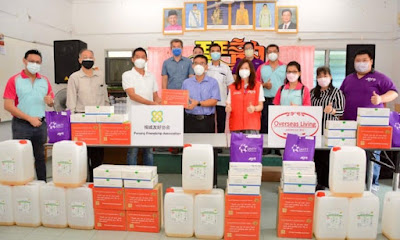
(檳城27日訊)檳城友好協會主辦,檳城精英國際青商會與Overseas Living(MM2H)有限公司聯辦“Caring Gift愛心禮物“3.0活動,捐助5萬3000令吉防疫物資予13所州內中小學、幼兒園和病老院。
受惠機構包括檳城公民總校、一校、二校、商務小學、中華A校、B校、鍾靈獨中、檳華女中、獨中、小學、幼兒園暨安親班、盧源來專科醫院接種疫苗中心及檳榔嶼病老院。
物資包括冠病自測試劑盒、KN95口罩、醫護口罩、消毒液、餅乾及印有“我已完成疫苗接種”的徽章。

升旗山區國會議員黃漢偉今早見證移交儀式時說,這是相關組織在冠病疫情期間舉辦的一系列公益活動,以社會資源援助學校及有需要的機構。
此活動在冠病疫情2年期間已連辦至3.0,1.0活動共籌得近7萬令吉的防疫物資(1400張隔離床單及4000張枕套)捐給檳城中央醫院,也捐聖誕禮券和飲料給醫護前線員。
2.0活動籌得近5萬令吉的物資(隔離防護服及防護面罩)捐給檳城中央醫院,並分發教育輔助金給打槍埔的B40和M40清寒學生(每人100令吉)。
有意參與“愛心禮物”活動,可聯絡檳城友好協會主席王敏詩(012-4908226)。

黃漢偉也撥款2萬令吉捐給升旗山阿依淡義務消防隊,作為購買救生快艇設備用途。
該隊早前成立全檳首支海上救援隊,籌募目標至少8萬令吉,以購買快艇和興建碼頭。
有意捐款者可聯絡該隊主席廖貴勝(012-4032994)。
Buletin Mutiara / December 27, 2021
Sekolah sekitar Parlimen Bukit Bendera terima sumbangan

AIR ITAM – Gabungan tiga badan bukan kerajaan (NGO) hari ini menyalurkan sumbangan kepada sekolah-sekolah di sekitar Parlimen Bukit Bendera.
Antara sumbangan yang disalurkan adalah cecair pembasmi kuman, pensanitasi tangan, pelitup muka dan kit ujian kendiri COVID-19 sebagai keperluan bagi sesi persekolahan dalam normal baharu.
Sumbangan disampaikan oleh Penang Friendship Association, Junior Chamber International (JCI) dan Overseas Living Sdn. Bhd. bernilai RM53,000 melalui Ahli Parlimen Bukit Bendera, Wong Hon Wai.
“Bagi menyokong sesi persekolahan tidak lama lagi, tiga NGO iaitu Penang Friendship Association, JCI dan Overseas Living membuat sumbangan-sumbangan ini sebagai persediaan untuk penggal baharu persekolahan.
“Untuk memulakan sesi persekolahan, kita perlu pastikan keadaan di sekolah adalah selamat untuk semua.
“Walaupun saya tahu Jabatan Pendidikan Negeri Pulau Pinang (JPNPP) turut menyumbang kelengkapan ini, namun selaku Ahli Parlimen dan NGO, kita turut melakukan atas dasar keperihatinan kepada masyarakat,” ujar Hon Wai ketika menyampaikan sumbangan tersebut melalui wakil-wakil NGO dan wakil-wakil sekolah bertempat di Pasukan Bomba Sukarela Bukit Bendera (PBSBB) di sini pagi tadi.
Hadir sama, President Penang Friendship Association, Jessie Ong dan Pengerusi PBSBB, Liew Kuai Sang.

Pada kesempatan sama, Hon Wai turut menyampaikan sumbangan berjumlah RM20,000 kepada PBSBB untuk membeli kelengkapan bot.
Kuai Sang ketika bercakap kepada pemberita memaklumkan bahawa PBSBB perlu berada dalam kesiapsiagaan yang tinggi bagi operasi menyelamat di dalam air kerana pasukan tersebut adalah satu-satunya bomba sukarela yang mempunyai unit laut.
“Secara keseluruhannya kami mempunyai enam buat bot untuk misi menyelamat dan cuma PBSPP sahaja di Pulau Pinang yang mempunyai unit laut.
“Antara misi yang kami selalu ikuti adalah kes terjun jambatan, kebakaran di laut dan misi menyelamat yang lain,” katanya lagi.
Terkini, anggotanya turut terlibat dalam membantu mangsa banjir di Selangor dan Pahang.
https://www.buletinmutiara.com/sekolah-sekitar-parlimen-bukit-bendera-terima-sumbangan/
Malaymail / 21 Dec 2021
Rising cost of ingredients and operating costs - a concerning
issue among coffee shop owners - Amanda Yeo
DECEMBER 21 ― The revocation of liquor licences for sales of alcoholic beverages on December 7 is indeed a relief to many coffee shop owners. However, the rising cost of ingredients and operating costs are other challenging issues to resolve.
Nowadays, main ingredients such as condensed milk and evaporated milk to make coffee or tea, vegetables, poultry, eggs and other food items are becoming more expensive.
According to Bukit Bendera Member of Parliament (MP) YB Wong Hon Wai, the price of a cabbage had gone up from RM7 to RM16 per kilogramme (kg) and “sawi pendek” at RM9 from RM3 per kg previously.
Not only did the price of vegetables witnessed a 200 per cent increase recently, but the price of chicken also rose from RM8 to RM10 per kg.
While the price of grade A eggs had been pushed up from RM10 to RM12 a tray, Yip Yoon Chong, a coffee shop owner based in Ipoh, informed The Star on November 24, 2021, that the price of a carton of 48 cans of condensed milk increased by RM10, which is from RM100 to RM110.
In addition, the Malaysia Singapore Coffee Shop Proprietors General Association President Wong Teu Hoon revealed the foreign worker salary has risen from RM1,200 to RM1,650. And the annual agency fee has shot up from RM6,000 to RM9,500.
As operating costs ranging from salaries of employees, rent, utility charges and cooking gas are relatively higher, coffee shop owners, in general, are not motivated to hire local workers under the current climate. Local workers will demand higher monthly salaries than foreign workers as they still have car and housing loans, for instance, to pay off.
Continuously rising cost of ingredients and operating costs have left coffee shop owners with no choice ― but to increase the price of beverages by 60 sen the most from January 1, 2022 onwards.
Coffee shops in rural areas will increase the price of their beverages by 20-30 sen whilst the coffee shops in urban areas are anticipated to go for an increment of 40-60 sen.
As more money is required to spend essential items (ie., food, water and shelter), hardcore poor and B40 households in the urban areas might choose not to order drinks in coffee shops. Unlike rural citizens who still could earn their livings through farming, urban citizens are relatively vulnerable in securing jobs with decent pay during the on-going uncertainty.
Hence, there is an increasing concern that when people have less money to spend out of their pocket, they would be less likely to visit coffee shops for more expensive meals. When fewer customers dine in at coffee shops, owners could probably only break even from the daily sales or continue to suffer losses.
Sabahans and Sarawakians, in particular, are feeling the pinch even more as the cost of living in both Sabah and Sarawak is relatively higher than in the peninsula.
Even though the cabotage policy was rescinded in 2017 in Sabah and Sarawak, which allows foreign vessels to land at Sabah and Sarawak ports directly, this has not resulted in a lower cost of living.
Foreign ships from the Far East such as South Korea, Japan, Taiwan and China with smaller quantities of exports destined for Sabah and Sarawak still have to transit in Port Klang, the national shipping hub first before heading to Sabah and Sarawak.
This implies a higher cost as the foreign cargo meant for Sabah and Sarawak have to go through a longer supply chain transporting fast-moving consumer goods (FMCG), which includes shipping agents and forwarders, truckers and shipping lines.
As a result, the prolonged process of delivering goods from the Far East to Sabah and Sarawak has, in turn, dampened cost competitiveness, which contributes to raising the cost of living in Sabah and Sarawak up to 30 per cent compared to the prices in Peninsula due to higher shipping freight costs.
Besides a smaller trade volume, other factors contributing to higher price levels in Sabah and Sarawak are weak distribution channels, high handling charges, inefficient inland transportation, the inefficiency of port operations and underdeveloped infrastructure in Sabah and Sarawak.
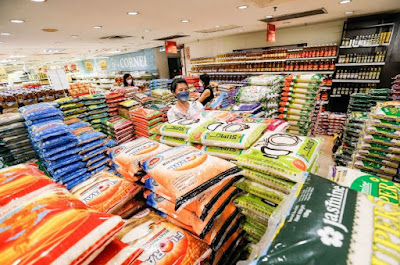
Although the issue of cost of living has been brought up by industrial players, Opposition parties and even non-governmental organisations (NGOs) in Sabah and Sarawak for years, the price disparity between East and West Malaysia still persists.
By narrowing the pricing gap between East and West Malaysia, the coffee shop owners in Sabah and Sarawak could enjoy lower ingredient and operation costs, giving them the chance to recover losses from previous lockdown measures.
During these unprecedented times, EMIR Research would like to suggest to the current administration to implement the following policies to reduce the financial burden among coffee shop owners in terms of ingredients and operation costs:
1. Increase crop diversification and produce high-quality agricultural products within Malaysia to reduce dependence on high-valued imported ingredients. Sabah and Sarawak, which covers 60% of the nation’s cumulative land area (ie., 198,354sq km), could potentially develop as Borneo food hub to fulfil local demand.
2. Provide seeds, fertilisers and pesticides related subsidies paid directly to the farmers through a coupon system.
For instance, the paddy farmer can use the coupon to buy high-quality seeds from any vendor or company. The vendor also can use the coupon to claim payment from the government. Not only this approach would create healthy competition among vendors, but it also would stimulate agricultural activities. At the same time, it would motivate farmers to produce high-quality agricultural products with sufficient quantities for domestic needs, especially among coffee shop owners.
3. The Federal Agricultural Marketing Authority (FAMA) and related government agencies can assist rural farmers in transporting agricultural products to major cities of Malaysia.
4. Upgrade Sepanggar Bay Container Port (SBCP) in Sabah and Bintulu Port in Sarawak as National Load Centres (NLCs) by creating a dual gateway policy with Port Klang covering the western hemisphere and both Sabah and Sarawak covering the east.
5. Implement a freight equalisation programme like Tasmania, Australia, to reduce the price of goods in Sabah and Sarawak.
Hopefully, Prime Minister Datuk Seri Ismail Yaakob would also address the critical issue of the price disparity between East and West Malaysia as Chairman of the National Action on Cost of Living.
Lastly but not least, the government should also ensure that the Jualan Keluarga Malaysia also extends to coffee shops and food and beverage businesses that mainly service the B40 and lower M40 consumer segment groups in the Klang Valley, Penang and other urban conurbations.
* Amanda Yeo is Research Analyst at EMIR Research, an independent think tank focused on strategic policy recommendations based on rigorous research.


